
The GMDS World Moral Council would be the central human oversight body of the entire system. Its main responsibilities would include developing and maintaining the Moral Compass as the basis for the Sanctions Catalogue. It would also oversee whether artificial intelligence operates exclusively according to human-defined moral rules and does not cause unjustified harm.
The World Moral Council's ten main tasks
| Area of responsibility | Members' specific activities |
|---|---|
| 1. Develop the Moral Compass | Develop universal moral principles from religions, philosophy, human rights and scientific findings, and check them for contradictions. |
| 2. Shape the Sanctions Catalogue | Develop rules for compensation and additional sanctions. Consider intent, negligence, personal responsibility and proportionality. |
| 3. Oversee damage assessment | Develop standards for assessing damage to people, animals, plants, the environment, property and society. |
| 4. Oversee AI systems | Check whether a future AI would apply only adopted rules and whether its decisions would be traceable and technically reliable. |
| 5. Oversee privacy and data security | Oversee protection against misuse of confidential information, unlawful surveillance and repurposing of collected data. |
| 6. Review responsibility rules | Define principles for individual culpability, state responsibility, chains of command and jointly caused harm. |
| 7. Oversee financial compensation | Check compensation calculations and accounting, prevent duplicate payments and consider effects on uninvolved parties. |
| 8. Organise public participation | Receive suggestions from people around the world, discuss them and prepare them for the Council's deliberation and decision-making. |
| 9. Investigate mistaken decisions | Commission independent reviews, identify systematic errors and enable corrections and reversals. |
| 10. Account publicly | Regularly publish decisions, amendment proposals, votes, conflicts of interest and results. |
Discussion draft · 100 people
Possible members by specialist group
Every member would have to disclose conflicts of interest and undergo independent review.
This list contains non-binding suggestions for a possible international body. It is not a selection decision and does not represent an existing council.
Portraits: Wikimedia Commons and public university and organisation profile pages. Click a photo to open its image source.
Philosophy, religion and ethics14 suggestions
This group should justify core values and examine how different cultures and worldviews understand them.
Relevant expertise: Normative ethics, comparative religion and culture, moral philosophy and weighing conflicting values.
| No. | Person | Expertise and background | Possible contribution to GMDS | Further information |
|---|---|---|---|---|
| 01 | Papst Leo XIV. | Head of the Catholic Church. | Could contribute an institutional perspective on Christian ethics, human dignity, social justice, peace and responsibility in the AI age. | Leo XIV has addressed human dignity and the social consequences of artificial intelligence in official statements and the 2026 encyclical “Magnifica Humanitas”. |
| 02 | Martha Nussbaum | Philosopher specialising in human dignity and capabilities. | Could clarify protection of human capabilities as a moral principle. | She works in philosophy and law at the University of Chicago. Her book “Creating Capabilities” develops the capabilities approach as a standard for human development and justice. |
| 03 | Amartya Sen | Nobel economics laureate for work on welfare economics. | Could connect justice with human development and actual living conditions. | He received the Nobel Prize in Economic Sciences in 1998. His research includes welfare economics, social choice, poverty and famine; the capabilities approach examines people's real freedoms. |
| 04 | Kwame Anthony Appiah | Philosopher and proponent of cosmopolitanism. | Could contribute to a moral code that respects cultural differences. | Appiah teaches philosophy at New York University. His work on cosmopolitanism and cultural identity explores how shared responsibility is possible across different traditions. |
| 05 | Michael Sandel | Political philosopher known for public debates on justice. | Could contribute experience in accessible discussion of difficult moral questions. | Sandel teaches political philosophy at Harvard University. His public lectures and books make questions of justice, the common good and the moral limits of economic decisions accessible. |
| 06 | Onora O’Neill | Philosopher of trust, human rights and responsibility. | Could be valuable for the ethical oversight of powerful institutions. | O'Neill combines political philosophy and ethics with public service. She was President of the British Academy and chaired Britain's Equality and Human Rights Commission. |
| 07 | Carol Gilligan | Pioneer of the ethics of care. | Could emphasise compassion, dependencies and the protection of vulnerable people. | Gilligan became known for research on the ethics of care and “In a Different Voice”. Her work highlights relationships, responsibility and experiences easily overlooked in abstract rule-based models. |
| 08 | Peter Singer | Philosopher of applied ethics, animal welfare and global poverty. | Could contribute consideration of human and non-human suffering. | Singer taught bioethics at Princeton University and is particularly known for work on animal ethics and global poverty. “Animal Liberation” shaped the modern debate on the moral treatment of animals. |
| 09 | Souleymane Bachir Diagne | Philosopher of African and Islamic intellectual traditions. | Could strengthen an internationally and religiously diverse moral foundation. | Diagne's research covers African philosophy, Islamic philosophy and Sufism, and the history of logic. He asks how universality can be developed jointly from different traditions. |
| 10 | Abdullahi Ahmed An-Na’im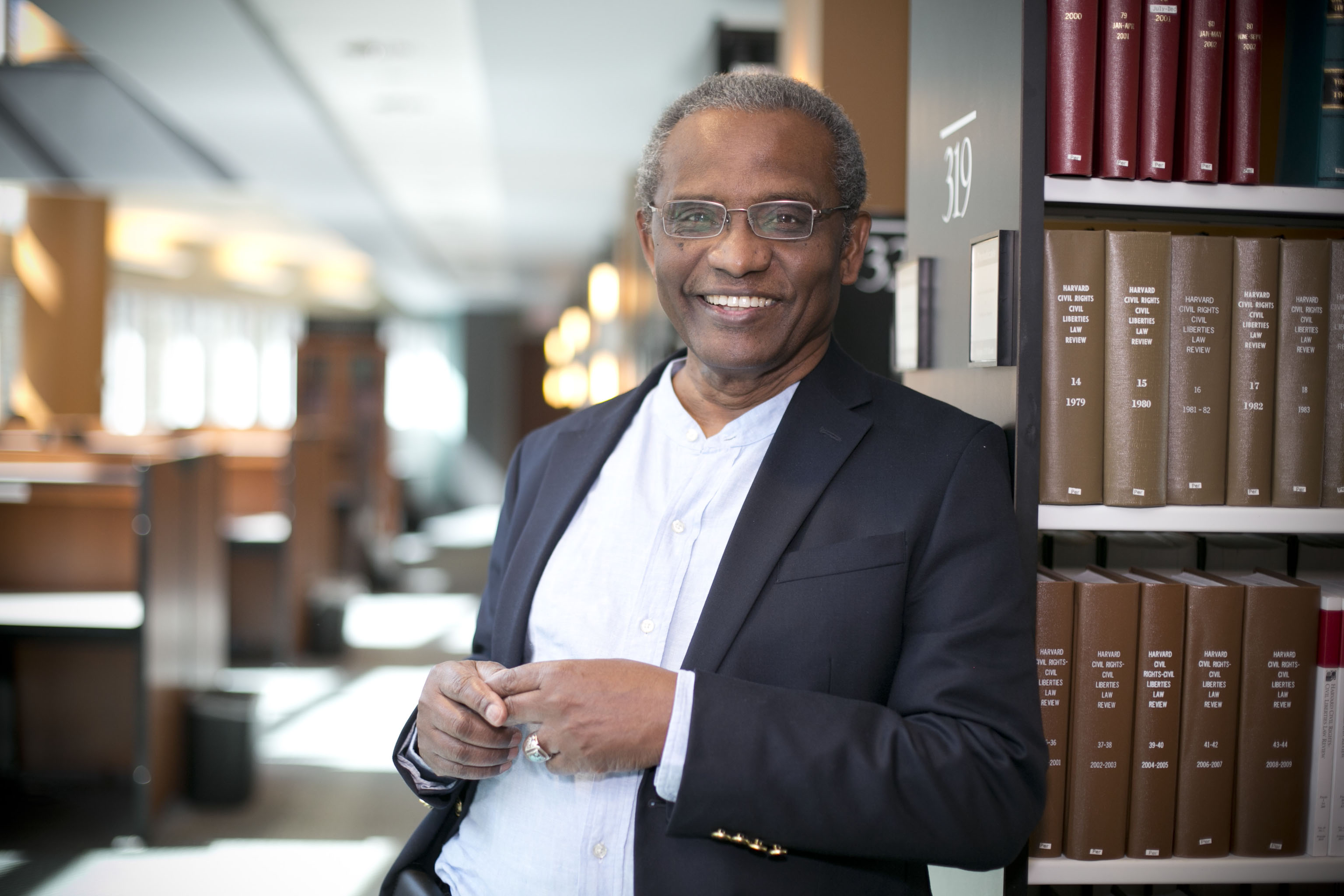 | Legal scholar specialising in Islamic law and human rights. | Could compare cultural and religious foundations of universal rules. | An-Na'im is a legal scholar and emeritus professor at Emory University. He researches Islamic law, international human rights and relationships between religion, state and constitutional order. |
| 11 | Amina Wadud | Islamic scholar specialising in justice and equality. | Could contribute a perspective on religious diversity and equal human worth. | Wadud combines Islamic theology with gender-just interpretation of the Qur'an, contributing perspectives on religious interpretation, equality and diversity within religion. |
| 12 | Bina Agarwal | Development economist specialising in gender equality, property and the environment. | Could connect moral justice with social consequences. | Agarwal studies land and property rights, livelihoods and environmental governance from economic and gender-policy perspectives. Her research links empirical work to institutional justice. |
| 13 | Ingrid Robeyns | Philosopher of distributive justice. | Could examine the appropriateness of financial sanctions and their effects on social inequalities. | Robeyns works on political philosophy and applied ethics at Utrecht University. Through limitarianism, she examines whether and when extreme private wealth should be politically and morally limited. |
| 14 | Shannon Vallor | Philosopher of technology ethics and human virtues. | Could connect classical moral theory with oversight of modern AI. | Vallor is Professor of Data and AI Ethics at the University of Edinburgh. She studies how AI, robotics and other new technologies change human abilities, habits and moral action. |
Artificial intelligence and AI ethics18 suggestions
The aim is to make technical systems transparent, safe and fair, and independently examine their limitations.
Relevant expertise: AI safety, machine learning, fairness, explainability, technical audits and responsible AI governance.
| No. | Person | Expertise and background | Possible contribution to GMDS | Further information |
|---|---|---|---|---|
| 15 | Yoshua Bengio | AI safety, machine learning | Could design technical controls for powerful AI and independent safety reviews. | Bengio is a leading deep-learning researcher and received the 2018 Turing Award with Geoffrey Hinton and Yann LeCun. His profile connects machine-learning foundations with safety questions concerning powerful AI. |
| 16 | Geoffrey Hinton | Neural networks, AI risks | Could critically analyse risks of automated mistakes and unintended AI behaviour. | Hinton made foundational contributions to neural networks and deep learning. He received the 2024 Nobel Prize in Physics for discoveries and inventions enabling machine learning with artificial neural networks. |
| 17 | Stuart Russell | Human-centred AI, control problems | Could review the separation of human rules from AI analysis and automated execution. | Russell co-authored “Artificial Intelligence: A Modern Approach”. His human-centred AI research asks how systems can be aligned with human goals and kept controllable. |
| 18 | Fei-Fei Li | Computer vision, human-centred AI | Could scientifically assess damage imagery analysis and minimise faulty visual-recognition risks. | Li is known for computer vision and the ImageNet dataset. She advocates human-centred AI and greater inclusion of social perspectives in development. |
| 19 | Timnit Gebru | Algorithmic discrimination, AI governance | Could identify systematic disadvantages and power asymmetries in GMDS early. | Gebru researches the effects of AI systems, datasets and algorithmic discrimination. She founded the Distributed AI Research Institute (DAIR), promoting independent and socially responsible AI research. |
| 20 | Joy Buolamwini | Fairness in facial recognition | Could examine misidentification by visual AI and unequal error rates across population groups. | Buolamwini founded the Algorithmic Justice League. Her “Gender Shades” research exposed unequal error rates in commercial facial-analysis systems and became a prominent example of algorithmic auditing. |
| 21 | Margaret Mitchell | AI documentation, Model Cards | Could develop consistent evidence on AI modules' limitations, training data and known errors. | Mitchell co-developed “Model Cards”, an approach to understandable documentation of AI models, including intended uses, limitations and known risks. |
| 22 | Rumman Chowdhury | Independent AI audits, red-teaming | Could organise systematic stress tests for misjudgements, security gaps and opportunities for misuse. | Chowdhury works on independent AI auditing and red-teaming. These stress tests deliberately seek errors, bias and exploitable functions before systems are deployed. |
| 23 | Kate Crawford | AI power structures, data ethics | Could critically examine global data collection and concentration of institutional power. | Crawford studies the material resources, labour conditions and power structures behind AI. “Atlas of AI” describes AI as a social and economic system, not just software. |
| 24 | Meredith Whittaker | Digital privacy, AI governance | Could review technical barriers against repurposing sensitive communications and financial data. | Whittaker connects privacy and technology policy with institutional power. She co-founded the AI Now Institute and advocates stronger public accountability for technology companies. |
| 25 | Virginia Dignum | Responsible AI | Could design processes keeping human decision-making authority clearly distinct from AI support. | Dignum works on responsible AI and its integration into organisations and society. Her approach considers responsibilities, consequences and human oversight as well as technical performance. |
| 26 | Sandra Wachter | AI law, privacy, algorithmic fairness | Could design complaints and oversight procedures for automated assessments and discriminatory outcomes. | Wachter connects law with algorithmic fairness and privacy. Her work examines how people can understand, challenge and obtain legal review of automated decisions. |
| 27 | Francesca Rossi | AI ethics, collective decisions | Could help explain how human-adopted rules can be technically formalised and applied verifiably. | Rossi researches AI ethics and cooperative intelligent systems. She connects technical design with appropriate consideration of human values and collective decisions. |
| 28 | Abeba Birhane | AI audits, social effects | Could examine data quality, bias and unintended social harms from analysis. | Birhane studies AI through critical data science and social justice, highlighting power relations, colonial influences and the social consequences of automated systems. |
| 29 | Inioluwa Deborah Raji | Algorithm audits, accountability | Could develop public auditing standards for automated analysis components' behaviour. | Raji develops methods for independent algorithmic audits and accountability. She studies how organisations can systematically investigate a system's actual risks and effects. |
| 30 | Sasha Luccioni | AI and environmental impacts | Could transparently account for energy and resource use of global AI infrastructure. | Luccioni researches AI's ecological impact, including energy demand and greenhouse-gas emissions, adding resource use and environmental consequences to technical safety questions. |
| 31 | Rediet Abebe | Algorithms and social justice | Could design transparent compensation distribution methods and assessment of their social effects. | Abebe connects computer science with social justice. Her research examines how algorithmic decisions affect inequalities and how distributional effects can be evaluated scientifically. |
| 32 | Chinasa T. Okolo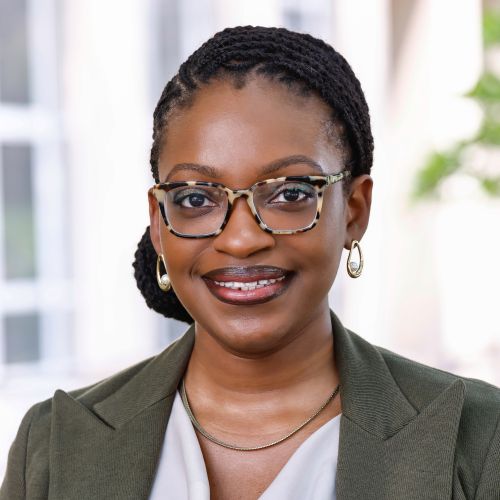 | International AI governance | Could help ensure African and other underrepresented regions participate in technical rulemaking. | Okolo works on international AI governance and African countries' perspectives. Her profile highlights who shapes global rules and whose needs they consider. |
Privacy and cybersecurity14 suggestions
It should identify risks from extensive data collection and digital attacks, and examine technical and legal safeguards.
Relevant expertise: Data protection law, information security, cryptography, secure system architecture, digital rights and independent security reviews.
| No. | Person | Expertise and background | Possible contribution to GMDS | Further information |
|---|---|---|---|---|
| 33 | Bruce Schneier | IT security, governance and oversight | Could review the overall architecture for manipulation risks, attack surfaces and power concentration. | Schneier is a security researcher and author on cryptography, computer security and surveillance. His work treats security as an institutional and social question as well as a technical function. |
| 34 | Cynthia Dwork | Differential Privacy | Could co-develop methods for statistically analysing damage trends without unnecessarily disclosing personal raw data. | Dwork played a major role in developing differential privacy and received the 2023 Turing Award. The method permits statistical analysis with mathematically bounded risk to individuals. |
| 35 | Shafi Goldwasser | Cryptography, verifiable computation | Could review cryptographic proof of correct accounting and calculations without revealing recipients' data. | Goldwasser received the 2012 Turing Award for foundational contributions to cryptography. Her work includes interactive proofs and zero-knowledge protocols that verify claims without exposing all underlying data. |
| 36 | Tanja Lange | Post-quantum cryptography | Could assess long-term security and cryptographic resilience of sensitive GMDS data. | Lange researches post-quantum cryptography at Eindhoven University of Technology, developing methods intended to resist future powerful quantum computers. |
| 37 | Matthew Green | Cryptography, private transactions | Could examine technical requirements for confidential compensation payments. | Green is a cryptographer researching privacy, secure communication and digital payment systems. His expertise connects practical security with protection of confidential financial data. |
| 38 | Eva Galperin | Protection from surveillance, cybersecurity | Could develop safeguards for victims, whistleblowers and particularly vulnerable people. | Galperin directs cybersecurity at the Electronic Frontier Foundation. She particularly works on digital surveillance, stalkerware and protection for people at risk. |
| 39 | Ronald Deibert | Digital surveillance, spyware | Could analyse weaknesses in comprehensive monitoring and protection against state abuse. | Deibert founded the Citizen Lab at the University of Toronto. The centre documents digital espionage, surveillance technologies and attacks on civil society and media. |
| 40 | Helen Nissenbaum | Contextual integrity, privacy | Could provide technical and ethical reasons for which data may be processed for which narrowly defined purpose. | Nissenbaum developed “Contextual Integrity”, assessing privacy by whether information flows fit their social context and its expectations. |
| 41 | Daniel Solove | Data protection law, digital rights | Could help develop limits for storing, publishing, challenging and deleting personal data. | Solove is a legal scholar specialising in privacy. His work classifies types of privacy violations and the legal protections and remedies they require. |
| 42 | Latanya Sweeney | Re-identification, privacy and fairness | Could test whether published case data unintentionally identify victims or uninvolved people. | Sweeney's re-identification research showed how supposedly anonymised datasets can identify individuals again. She also investigates discrimination risks in data-based decisions. |
| 43 | Alessandro Acquisti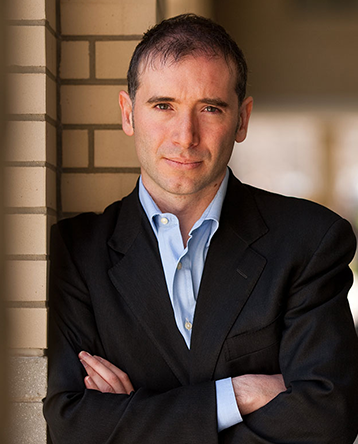 | Economics of privacy | Could examine risks and incentives associated with disclosing financial information. | Acquisti studies economic incentives and behavioural questions around privacy, showing how design, available information and market conditions influence personal-data decisions. |
| 44 | Max Schrems | Privacy rights, enforcement | Could support independent complaint rights and effective controls over data processing. | Schrems is an Austrian lawyer and founder of privacy organisation NOYB. His European Court of Justice cases shaped debate on personal-data transfers between the EU and USA. |
| 45 | Nighat Dad | Digital rights, protection of vulnerable people | Could develop safeguards for groups particularly threatened by surveillance and public exposure. | Dad founded Pakistan's Digital Rights Foundation, which works on digital violence, privacy and support for people experiencing online harassment. |
| 46 | Renata Ávila | Digital civil rights, data access | Could reconcile open knowledge access with privacy and digital self-determination. | Ávila is a human-rights lawyer working on digital rights and data policy. Her profile connects open access to knowledge with digital self-determination and international power distribution. |
Human rights and international justice16 suggestions
This group should examine how universal protective rights, international standards and fair proceedings are considered in conflicts.
Relevant expertise: Human rights and international law, humanitarian law, international court proceedings, evidence standards and access to remedies.
| No. | Person | Expertise and background | Possible contribution to GMDS | Further information |
|---|---|---|---|---|
| 47 | Agnès Callamard | Human rights, international accountability | Could ensure GMDS's moral ambition also includes protection from unlawful sanctions. | Callamard is a human-rights expert and heads Amnesty International. Previously she investigated extrajudicial executions as a UN Special Rapporteur and led a UN inquiry into Jamal Khashoggi's killing. |
| 48 | Nadia Murad | Victim protection, sexual violence in war | Could bring survivors' actual needs into the development of reparation procedures. | Murad is a Yazidi human-rights activist and Nobel Peace Prize laureate. She advocates for survivors of sexual violence and justice after crimes by the so-called Islamic State. |
| 49 | Malala Yousafzai | Education, young people's rights | Could strengthen protection of children and young people and their access to public participation. | Yousafzai is a Nobel Peace Prize laureate and co-founder of Malala Fund. Her work focuses on girls' right to education and participation in decisions affecting their lives. |
| 50 | Kailash Satyarthi | Children's rights, combating exploitation | Could provide expertise for rules against child labour, trafficking and economic exploitation. | Satyarthi is a Nobel Peace Prize laureate who has campaigned against child labour and trafficking for decades. His movement Bachpan Bachao Andolan promotes children's protection and education. |
| 51 | Shirin Ebadi | Human rights, rule of law | Could strengthen rights against state power and independent correction mechanisms. | Ebadi is an Iranian lawyer and Nobel Peace Prize laureate. She defended human rights and the rule of law and founded Iran's Defenders of Human Rights Center. |
| 52 | Oleksandra Matviichuk | Documentation of war crimes | Could co-develop standards for preserving evidence and protecting civilians affected by warfare. | Matviichuk heads Ukraine's Center for Civil Liberties, awarded the 2022 Nobel Peace Prize. It documents human-rights violations and supports accountability for war crimes. |
| 53 | Sima Samar | Human rights, equality | Could bring perspectives from societies with restricted freedoms and difficult security conditions. | Samar is an Afghan doctor and human-rights activist. She established health and education services for women and chaired the Afghan Independent Human Rights Commission. |
| 54 | Hina Jilani | Protection of human-rights defenders | Could support independent complaint procedures and protection of critical observers. | Jilani is a Pakistani human-rights lawyer and co-founder of the Human Rights Commission of Pakistan. Her work includes protecting human-rights defenders and independent legal proceedings. |
| 55 | Fatou Bensouda | International criminal law, evidence standards | Could help distinguish proven acts, suspicions and personal responsibility. | Bensouda is a Gambian lawyer and served as International Criminal Court Chief Prosecutor from 2012 to 2021. Her experience covers international crimes and prosecution requirements. |
| 56 | Zeid Ra’ad Al Hussein | International human-rights institutions | Could examine standards for global oversight bodies' independence and accountability. | Zeid was UN High Commissioner for Human Rights from 2014 to 2018 and previously a Jordanian diplomat. His profile connects international human-rights work with independent institutions and multilateral oversight. |
| 57 | Volker Türk | Universal human rights, UN procedures | Could establish fundamental rights as binding safeguards for rule application and publication. | Türk is an Austrian lawyer with extensive UN experience, including refugee protection and human rights. This institutional context concerns implementation of international protection standards. |
| 58 | Kenneth Roth | Documentation of human-rights violations | Could evaluate publicly reviewable reporting and sourcing standards for GMDS case data. | Roth led Human Rights Watch from 1993 to 2022. He is known for investigations and public reporting on human-rights violations and how independent documentation can generate political pressure. |
| 59 | Nani Jansen Reventlow | Strategic human-rights litigation | Could strengthen effective appeals and protection against structurally discriminatory decisions. | Jansen Reventlow is a human-rights lawyer and founder of the Digital Freedom Fund. Her work supports strategic litigation on digital rights and access to effective remedies. |
| 60 | Radhika Coomaraswamy | Children in armed conflicts | Could consider particularly vulnerable victim groups and long-term war damage. | Coomaraswamy was UN Special Representative for Children and Armed Conflict and Special Rapporteur on Violence against Women. She brings extensive experience with international protection mandates. |
| 61 | Juan E. Méndez | Prohibition of torture, procedural rights | Could develop independent procedures against coercion, public prejudgement and disproportionate sanctions. | Méndez is an Argentine lawyer and former UN Special Rapporteur on Torture. His work concerns procedural safeguards and enforcement of the absolute prohibition of torture. |
| 62 | Julienne Lusenge | Victim protection, sexual violence | Could promote confidential assistance, specific victim safeguards and appropriate reparation. | Lusenge is a human-rights activist from the Democratic Republic of the Congo and co-founder of SOFEPADI. She works with survivors of sexual violence and advocates access to help and justice. |
Peacebuilding and international law12 suggestions
This specialist group contributes knowledge of conflict dynamics, civilian protection and peaceful conflict resolution.
Relevant expertise: Conflict analysis, mediation, peace processes, international humanitarian law and civilian protection.
| No. | Person | Expertise and background | Possible contribution to GMDS | Further information |
|---|---|---|---|---|
| 63 | Leymah Gbowee | Non-violent peace movements | Could strengthen peaceful conflict resolution and civil-society participation in crisis regions. | Gbowee received the 2011 Nobel Peace Prize for her role in Liberia's women's peace movement. Her work demonstrates the role of civil society, particularly women, in peace processes. |
| 64 | Jody Williams | Disarmament, landmine damage | Could contribute expertise on long-term personal and ecological war damage and international campaigning. | Williams received the 1997 Nobel Peace Prize for the international campaign against landmines, highlighting weapons' long-term civilian consequences and the importance of civil-society coalitions. |
| 65 | Beatrice Fihn | Nuclear disarmament | Could support assessment of catastrophic, intergenerational consequences of weapons use. | Fihn led the International Campaign to Abolish Nuclear Weapons (ICAN), awarded the 2017 Nobel Peace Prize. Her expertise concerns disarmament and nuclear weapons' humanitarian consequences. |
| 66 | Mirjana Spoljaric Egger | International humanitarian law | Could contribute civilian-protection requirements and humanitarian consequences of sanctions and payments. | Spoljaric Egger is President of the International Committee of the Red Cross. The ICRC works worldwide under international humanitarian law to protect people affected by armed conflict. |
| 67 | Jan Egeland | Refugee protection, humanitarian assistance | Could assess economic and personal consequences of displacement and war. | Egeland is a Norwegian diplomat who led UN humanitarian work. As Secretary General of the Norwegian Refugee Council, he addresses assistance and protection for displaced people. |
| 68 | Peter Maurer | Humanitarian diplomacy, institutional oversight | Could contribute experience establishing independent international procedures and oversight structures. | Maurer was President of the International Committee of the Red Cross from 2012 to 2022. His experience includes humanitarian diplomacy and leading an independent organisation in conflict situations. |
| 69 | Maria Ressa | Press freedom, disinformation | Could co-develop methods for checking public sources and addressing disinformation, while strengthening independent journalism. | Ressa is a journalist, co-founder of Rappler and Nobel Peace Prize laureate. She documents how disinformation and digital attacks undermine press freedom and democratic debate. |
| 70 | Dmitry Muratov | Independent journalism | Could bring the importance of independent reporting in repressive settings into evidence rules. | Muratov is a Russian journalist and Nobel Peace Prize laureate. As long-serving editor-in-chief of independent newspaper Novaya Gazeta, he addressed investigative reporting and risks to media workers. |
| 71 | Philippe Sands | International law, international crimes | Could distinguish attribution of war events to states and individual responsible parties. | Sands is an international-law scholar and professor at University College London. His work and “East West Street” address the origins of international criminal-law concepts and individual responsibility for mass atrocities. |
| 72 | Payam Akhavan | International criminal tribunals | Could examine evidence and individual culpability requirements for serious international crimes. | Akhavan is a lawyer involved in international criminal proceedings, including at the International Criminal Tribunal for the former Yugoslavia. His expertise includes evidence and responsibility for genocide and other serious crimes. |
| 73 | Leila Nadya Sadat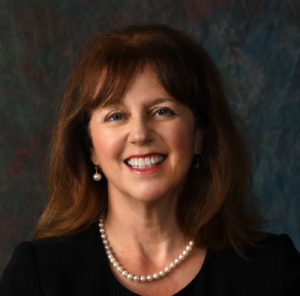 | International criminal law | Could contribute legal standards for assessing crimes against humanity. | Sadat is Professor of International Criminal Law at Washington University in St. Louis. She works on genocide, crimes against humanity and development of international criminal-law standards. |
| 74 | Dapo Akande | Law of armed conflict | Could explain differences between state liability, chains of command and individual responsibility. | Akande is Professor of Public International Law at the University of Oxford. His research covers armed-conflict law, state responsibility and powers of international courts. |
Environment, climate, animals and the future12 suggestions
This group considers damage to ecosystems and animals, and the consequences of today's decisions for future generations.
Relevant expertise: Climate and environmental sciences, ecology, conservation law, animal ethics and intergenerational justice.
| No. | Person | Expertise and background | Possible contribution to GMDS | Further information |
|---|---|---|---|---|
| 75 | Johan Rockström | Climate research, planetary boundaries | Could include irreversible environmental impacts and long-term ecological limits in damage models. | Rockström is an Earth-system scientist and co-developer of the planetary-boundaries framework, which examines ecological limits within which societies can operate safely. |
| 76 | Christiana Figueres | International climate negotiations | Could contribute experience in globally negotiated agreements and balancing interests. | Figueres was Executive Secretary of the UN Framework Convention on Climate Change and played a central role in Paris Agreement negotiations. Her expertise includes climate diplomacy and shared targets. |
| 77 | Sunita Narain | Environmental justice, development | Could examine environmental impacts and their unequal distribution between poor and wealthy populations. | Narain heads India's Centre for Science and Environment. Her work connects environmental policy, public health and development, emphasising unequal environmental burdens. |
| 78 | Hindou Oumarou Ibrahim | Indigenous rights, climate impacts | Could include traditional knowledge and particularly vulnerable habitats in the damage register. | Ibrahim is an environmentalist and representative of Indigenous communities from Chad. She works to include local and traditional knowledge in climate and environmental policy. |
| 79 | Nemonte Nenquimo | Amazonia, Indigenous land rights | Could contribute Indigenous communities' protection interests and damage to natural livelihoods. | Nenquimo is a Waorani leader and environmentalist from Ecuador. She defended Indigenous land rights and opposed Amazon oil drilling, receiving the 2020 Goldman Environmental Prize. |
| 80 | Katharine Hayhoe | Climate science, communication | Could present scientific uncertainty and climate impacts transparently and understandably. | Hayhoe is a climate scientist communicating research on climate effects and risks. Her profile connects scientific assessment with clear explanations of uncertainty and options for action. |
| 81 | Carlos Nobre | Amazonia, Earth-system research | Could assess risks from deforestation and long-term ecosystem change. | Nobre is a Brazilian climate scientist researching Amazonia, deforestation and Earth-system change. His work examines possible tipping points and effects on climate and ecosystems. |
| 82 | Sandra Díaz | Biodiversity, ecosystem services | Could provide a scientific foundation for assessing lost biodiversity and ecological functions. | Díaz is an Argentine ecologist and co-chaired the IPBES global biodiversity assessment. Her research concerns biodiversity and nature's contributions to people. |
| 83 | Paula Kahumbu | Animal protection, wildlife crime | Could translate consequences of animal cruelty, species loss and illegal wildlife trade into concrete case types. | Kahumbu is a Kenyan conservationist and CEO of WildlifeDirect. She opposes wildlife crime and works with communities and the public to protect elephants and other species. |
| 84 | Carl Safina | Animal behaviour, marine ecology | Could consider sentient animals' well-being and suffering in moral assessments. | Safina is an ecologist, author and founder of the Safina Center. His work connects marine ecology and animal behaviour with how people treat sentient animals and their habitats. |
| 85 | Pavan Sukhdev | Environmental economics, natural capital | Could explain limitations and possibilities of monetary environmental-damage valuation. | Sukhdev is an environmental economist who led “The Economics of Ecosystems and Biodiversity” (TEEB), examining how economic decisions can make natural systems' value and loss visible. |
| 86 | Ayana Elizabeth Johnson | Marine conservation, coastal ecosystems | Could assess marine and coastal damage and consequences for affected communities. | Johnson is a marine biologist and founder of Urban Ocean Lab. Her work focuses on coastal cities, marine conservation and equitable climate policy for affected communities. |
Democratic participation and digital engagement8 suggestions
This group should develop transparent, accessible and fair forms of participation and examine their democratic legitimacy.
Relevant expertise: Deliberative democracy, participation procedures, digital accessibility, multilingualism, moderation and platform design.
| No. | Person | Expertise and background | Possible contribution to GMDS | Further information |
|---|---|---|---|---|
| 87 | Claudia Chwalisz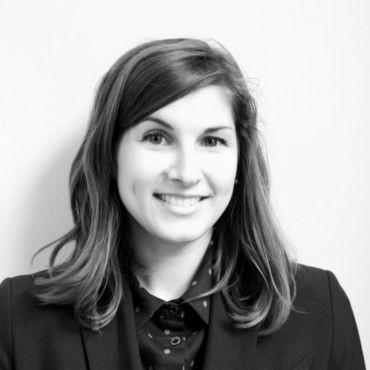 | Citizens' assemblies, representative sortition | Could help develop a publicly reviewable selection process for the World Moral Council's 100 members. | Chwalisz founded DemocracyNext and works on citizens' assemblies and representative sortition. Her profile connects research on participation models with practical design of democratic institutions. |
| 88 | Hélène Landemore | Democratic theory, citizens' assemblies | Could design representative participation and effective input from people without public prominence. | Landemore is a political philosopher researching open democracy and citizens' assemblies. She asks how diverse populations can participate directly and equally in political decisions. |
| 89 | James Fishkin | Deliberative Polling, citizen deliberation | Could design public discussions prioritising informed judgement over short-term voting. | Fishkin developed Deliberative Polling, in which representatively selected citizens deliberate after receiving information and discussion before their views are surveyed. |
| 90 | Audrey Tang | Digital democracy, open source | Could support transparent online participation and secure, accessible input on GMDS rules. | Tang was Taiwan's first Digital Minister and is known for open, participatory digital government. Her expertise concerns tools enabling public deliberation and cooperation across political divides. |
| 91 | Pia Mancini | Digital democracy, community funding | Could contribute digital proposal and decision processes and transparent project funding. | Mancini is a political activist and co-founder of DemocracyOS and Open Collective. Her work connects digital participation with transparent organisation and funding of collective projects. |
| 92 | Nanjala Nyabola | Digital democracy, social participation | Could critically examine digital participation beyond Western-style democracies. | Nyabola is a Kenyan writer and political analyst. She writes on digital technology, politics and power in Africa, showing how local social conditions shape online participation. |
| 93 | Tim Berners-Lee | World Wide Web, open standards | Could support openness, interoperability and lasting public access to the GMDS web platform. | Berners-Lee invented the World Wide Web and founded the World Wide Web Consortium (W3C), which develops open web standards. His expertise concerns accessibility, interoperability and lasting openness of digital infrastructure. |
| 94 | Jimmy Wales | Wikipedia, collaborative knowledge maintenance | Could contribute experience in global moderation, source verification and collaborative knowledge work. | Wales co-founded Wikipedia and the Wikimedia Foundation. The collaboratively maintained encyclopaedia offers experience in global moderation, sourcing rules and knowledge correction. |
Economics, finance and anti-corruption6 suggestions
It should assess economic damage and distributional effects, and evaluate financial rules and controls against misuse.
Relevant expertise: Economics, accounting, public finance, compensation models, asset transparency, anti-money-laundering and anti-corruption.
| No. | Person | Expertise and background | Possible contribution to GMDS | Further information |
|---|---|---|---|---|
| 95 | Esther Duflo | Development economics, empirical evaluation | Could scientifically investigate whether immediate sanctions actually reduce harm. | Duflo received the 2019 Nobel Prize in Economic Sciences for an experimental approach to alleviating global poverty. She co-founded the Abdul Latif Jameel Poverty Action Lab (J-PAL). |
| 96 | Joseph Stiglitz | Economics, inequality | Could assess macroeconomic and social side effects of extensive asset recovery. | Stiglitz received the 2001 Nobel Prize for work on markets with asymmetric information. His research on inequality and public institutions provides context for sanctions' economic side effects. |
| 97 | Kate Raworth | Doughnut economics, sustainability | Could connect social minimum standards and ecological limits in compensation and system goals. | Raworth developed doughnut economics, combining social minimum conditions with ecological limits and asking how economic activity can operate within both. |
| 98 | Gabriel Zucman | Wealth and tax transparency | Could explain international asset structures and obstacles to tracing compensation claims. | Zucman researches wealth inequality and international tax avoidance. He founded the EU Tax Observatory, which scientifically examines global tax data and policy measures. |
| 99 | Mariana Mazzucato | Public-purpose economics, innovation | Could account for incentives and public investment so sanctions do not cause additional social damage. | Mazzucato is an economist and founder of the UCL Institute for Innovation and Public Purpose. Her work on mission-oriented innovation policy examines public institutions' role in shaping economic goals. |
| 100 | Maíra Martini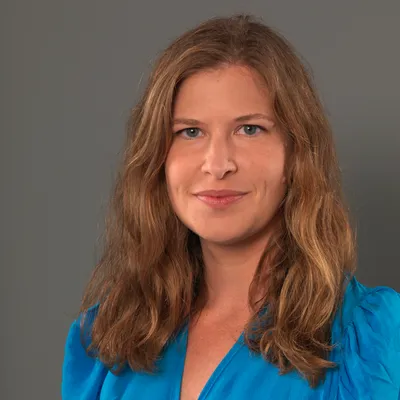 | Anti-corruption, money laundering | Could design mechanisms against misuse of GMDS financial processes and conflicts of interest in oversight. | Martini works at Transparency International on anti-corruption, money laundering and asset recovery. Her expertise concerns reviewing financial flows and protecting public funds from misuse. |
The specialist-group assignments, brief descriptions and possible contributions are preliminary proposals for public discussion.
Overview of the 100 suggestions
Distribution by field
- Philosophy, religion and ethics14
- AI and AI ethics18
- Privacy and cybersecurity14
- Human rights16
- Peacebuilding and international law12
- Environment and animal protection12
- Democratic participation8
- Economics and financial justice6
A proposal list organised by topic, not the council's final composition.